Transform teamwork with Confluence. See why Confluence is the content collaboration hub for all teams.Get it free
The 5 phases of the project life cycle

Key Takeaways
The project life cycle is a five-phase framework consisting of initiation, planning, execution, monitoring, and closure that guides a project from start to finish.
This structured approach helps teams manage work more effectively by providing clear milestones and deliverables for each project stage.
Understanding these phases allows project managers to allocate resources and manage stakeholder expectations more accurately throughout the project.
Conduct a formal review at the end of each phase to ensure all requirements have been met before moving on to the next stage.
Whether you’re building an app or overhauling your branding strategy, effective project management isn’t just helpful—it’s absolutely essential. Truly successful teams don’t stumble through projects.
Instead, the most collaborative teams master the project life cycle and recognize it as the backbone of any serious initiative. Without a clear timeline or accessible documentation, your team can lose direction or see miscommunication derail projects.
And it’s easier to do than you’d think.
The Atlassian 2025 State of Teams report found 25% of both teams and executives spend a quarter of their week trying to find information. Additionally, 74% of leaders believe poor communication directly impacts the overall quality of work.
That’s why communication and detailed project roadmaps are so important to project success. In this article, we’ll break down how to manage every stage of the project life cycle and explain each phase.
What is the project life cycle?
The project life cycle is a five-phase framework project managers use to guide their projects to completion. It outlines all project stages, from inception to final implementation, and describes what the team must achieve during each phase.
When project managers, or anyone leading a project, truly grasp the various phases of project management, they unlock the power to see the big picture and steer each stage with confidence.
Breaking the project down into manageable steps lets them anticipate challenges. That's why it’s all about staying focused on achieving stellar results.
Combining the right documentation and project timeline software are all but certain to improve team management throughout the project’s journey.
The 5 phases of a project life cycle
Understanding the five project management life cycle phases and their requirements will give you a repeatable, improvable framework for effective project management.
Phase 1: Initiation
The initiation phase of the project life cycle is where a project’s feasibility and value are assessed before any detailed planning or execution begins. During this phase, the project’s objectives, scope, purpose, and stakeholders are defined.
Key activities typically include:
Developing a business case
Conducting a feasibility study
Identifying stakeholders
Creating a project charter or brief that formally authorizes the project

Using a project charter template helps you kick off the initiation phase with clear documentation. The goal of the initiation phase is to ensure there is a clear understanding of what the project aims to achieve.
That’s why you need to secure approval and resources to move forward to the planning phase.
Phase 2: Planning
During the planning phase in the project life cycle, a project roadmap is created for completing the work on time and in line with your success criteria, all without going over budget.
In this stage, you’ll break your project into smaller tasks, set milestones and manage deadlines, and create detailed plans for resources, schedules, tools, and task assignments.
Some of the items you might create in the planning phase include:
Project management plan: Specify the project phases and tasks with a work breakdown structure and Gantt chart to outline task dependencies and timelines.
Risk plan: Predict potential risks and create standard operating procedures around who owns each issue.
Financial plan: Create and allocate a budget across teams and resource types.
Resource plan: Identify team members you need and assign roles, while centralizing essential resources.
Communication plan: Choose the channel(s) to communicate with your team and clients, or if Loom Screen Recordings can cut unnecessary meetings.
Quality plan: Establish KPIs and define how you’ll measure your team’s performance and outputs.

Phase 3: Execution
The project execution phase is where you implement the project plan and complete the project deliverables. As the project manager, your responsibilities may require you to:
Assign tasks
Clarify roles
Answer questions
Oversee work
Facilitate communication
Attend briefings and meetings
Support your team
Handling the day-to-day demands of complex project execution is no easy feat. Instead, you have to allow your team to focus on delivering work rather than struggling with spreadsheets and disjointed tools.
The biggest challenge for project managers is preventing all the tiny details from slipping through the cracks. Centralize all your work in one place so you understand how each task impacts the timeline and budget.
And there’s no doubting project challenges when there are elaborate tasks or multiple teams involved. That’s exactly why Matt Chester, Senior System Engineer at Reddit, invited design and branding teams to work with engineers within a centralized platform.
"Cross-functional teams have found it easier to work with developers and technical teams in Atlassian because they don’t have to switch tools to create or manage tickets," Matt says. "By centralizing tooling, they can now work in one place, see metrics about their work, and make it easier for people to interface with them."
Phase 4: Monitoring and controlling
In this phase, you’ll track project progress and make adjustments to ensure the project stays on track. Collect information from timesheets, reports, and team members.
Always stay on top of your project’s progress by using timeline views in your project management software. Whether it’s a Gantt Chart or Kanban board, you must identify when things are off track against your project roadmap.
In a recent episode of the Projectified podcast from the Project Management Institute, Adam Motiwala, a product manager at Google, shared the challenges restoring order with communication. He explained how project managers need to control projects by understanding personalities and trust.
“Just like any relationship, communication is very critical,” Adam says. “If you don’t communicate, that’s when the friction happens. And just like any relationship you have to have that trust.”
As the project manager, your job is not to assume, but take action. This is the controlling aspect of this phase. Successful project managers reinforce the life cycle of project by controlling aspects like:
Timelines: If a team member can’t complete a task on time, you must assign it to someone else.
Cost: If a vendor cost is higher than anticipated, you need to immediately reduce the project scope.
Team: If there’s a disagreement between two team members, you have the last word to resolve it.
Quality: If a part of the product is substandard, you create a different approach to build it.
Risk: If an unforeseen risk emerges, you mitigate it before it affects the entire team.
Present these findings to your team members in a post-project meeting documented in Confluence. Encourage them to speak, share what went wrong, and voice their ideas about how to do better on similar projects.

In addition to evaluating the team, assess the quality of your product by confidently knowing its up to the client’s standards, solves the actual problem, and areas where you possibly under or over performed.
This help you better understand your current ability to hit your goals. Qualitative and quantitative feedback is important. Run tests, send surveys, and get an accurate depiction of your creation’s performance.
The 3 types of project life cycles
Your team is unique—which is why you want to use a process to fir your specific needs. Luckily, there are three types of project life cycles, so see which one could work best for you.
1. Agile model
The Agile methodology or model emphasizes flexibility and iterative progress. It allows for adjustments and improvements throughout the project. Teams adapt incrementally based on constant feedback.
Agile is popular among software developer teams who rely on constant back-and-forth collaboration and regularly encounter unforeseen obstacles. And two Agile frameworks to consider are Kanban and Scrum.
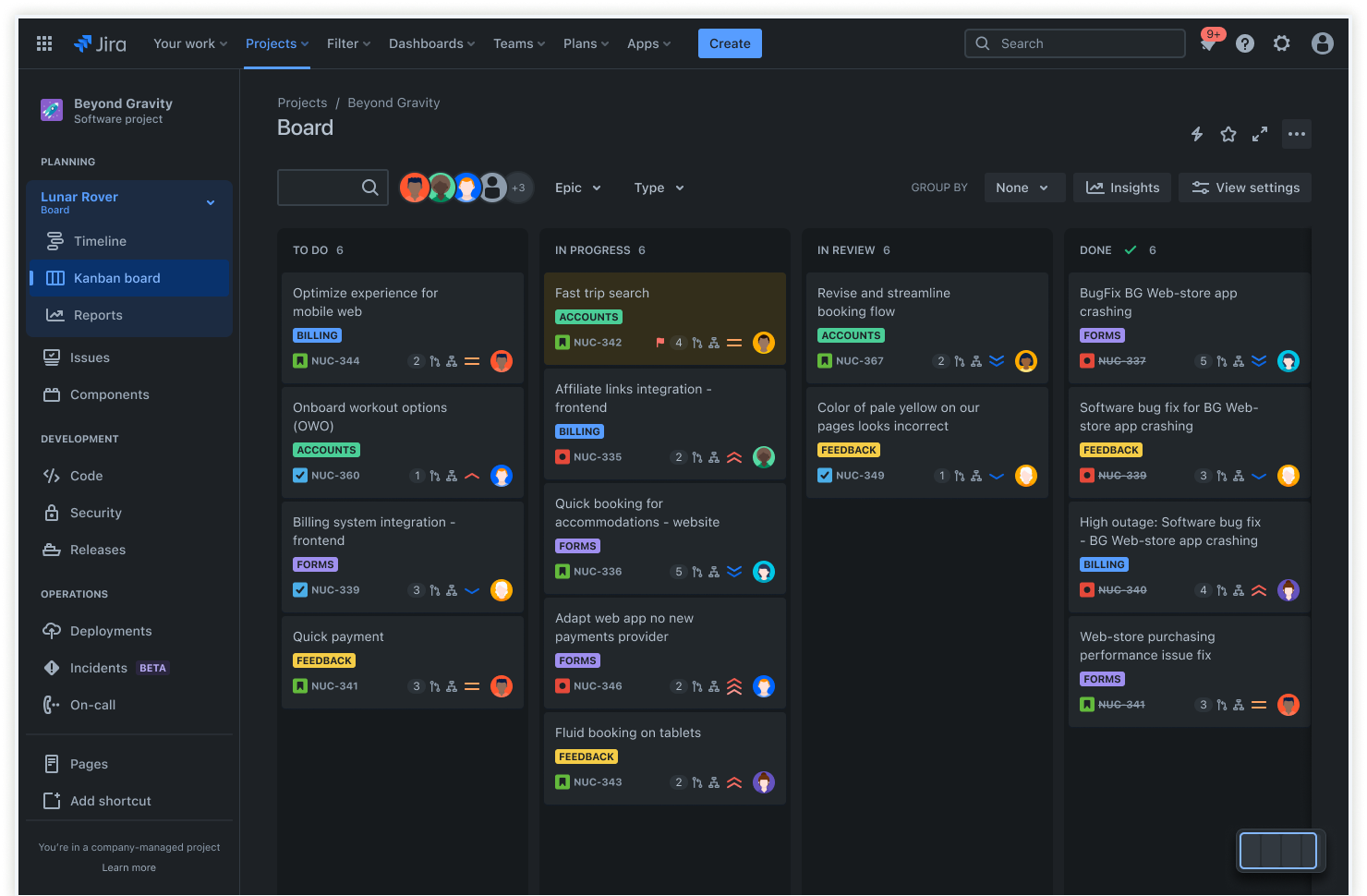
Kanban involves visualizing tasks, limiting work in progress, and ensuring a continuous flow of work. This makes it ideal for projects requiring flexibility without strict deadlines.
On the other hand, Scrum operates in time-boxed sprints. Within a sprint, you’ll have set goals and regular reviews, which will promote structured iterations and team accountability.
2. Waterfall model
The Waterfall methodology follows a linear sequential flow, with each phase dependent on the deliverables of the prior ones. Unlike Agile or iterative models, Waterfall is not an iterative process.
This model doesn’t allow for flexibility or revisiting previous steps. It’s usually best for projects with well-defined requirements and minimal expected changes.
Teams must complete one stage before moving to the next, with little room for changes once a phase is finished. Examples of project types that often follow the Waterfall model include manufacturing, construction, and healthcare projects.
3. Iterative model
The iterative project life cycle is a flexible, cyclical approach where teams develop a product through repeated cycles of prototyping, testing, and refining. Instead of following a strict, linear path, teams build a working version.
This allows teams to gather feedback from customers and stakeholders, and use those insights to improve the product in the next cycle. The process repeats until the desired outcome is achieved.
Unlike rigid, sequential methods, the iterative approach encourages collaboration and problem-solving. This cycle of continuous improvement makes it especially effective for tackling complex projects and evolving requirements.
It’s slightly different from the Agile model in that feedback usually occurs at the end of a milestone. In Agile, feedback is more continuous and frequent.
Why is project life cycle management important?
Effective project life cycle management streamlines processes in several ways.
Provides structure and clarity: It breaks down complex projects into manageable phases, making it easier to plan, execute, and monitor.
Improves planning and control: Each phase has clear objectives, deliverables, and review points, allowing for better resource allocation and risk management.
Facilitates communication: Stakeholders understand what to expect at each stage, improving transparency and alignment.
Enables progress tracking: Project managers can measure progress against phase-specific milestones and adjust plans as needed.
Supports quality assurance: Defined phases allow for regular reviews and quality checks, reducing the chance of errors going unnoticed.

Project managers can use Jira to organize and prioritize ideas, which makes it easy to create and share custom roadmaps with the team. With it, you can break large projects into manageable tasks, track progress, and encourage teamwork across the company.
Challenges of project life cycle management
Project management can be complex and challenging. It requires careful attention to potential obstacles, which includes:
Scope creep: When project requirements expand beyond what the team decided at the start of the project, it leads to insufficient resources, delays, and costly detours from the project plan.
Resource constraints: This can cause delays, jeopardizing successful project completion, which is why you must check your resources early in project planning.
Communication breakdowns: Poor communication hurts productivity, which is why it’s so important to build a culture of willingness to share information and keep everyone aligned.

Best practices in project life cycle management
Below are some proven techniques for mastering project life cycle management:
Implement clear milestones. Break down your project into milestones with deadlines. This makes your project feel more achievable and allows you to track its progress more effectively.
Communicate regularly. Meet with team members regularly to discuss progress, discover bottlenecks, and source new ideas.
Involve stakeholders. Draw stakeholders into the process by asking for feedback, giving them updates, and clarifying their requests to ensure the team meets all expectations.
Keep a close eye on task progress, and make it easy for your team members to do the same. This avoids missed deadlines and work falling through.
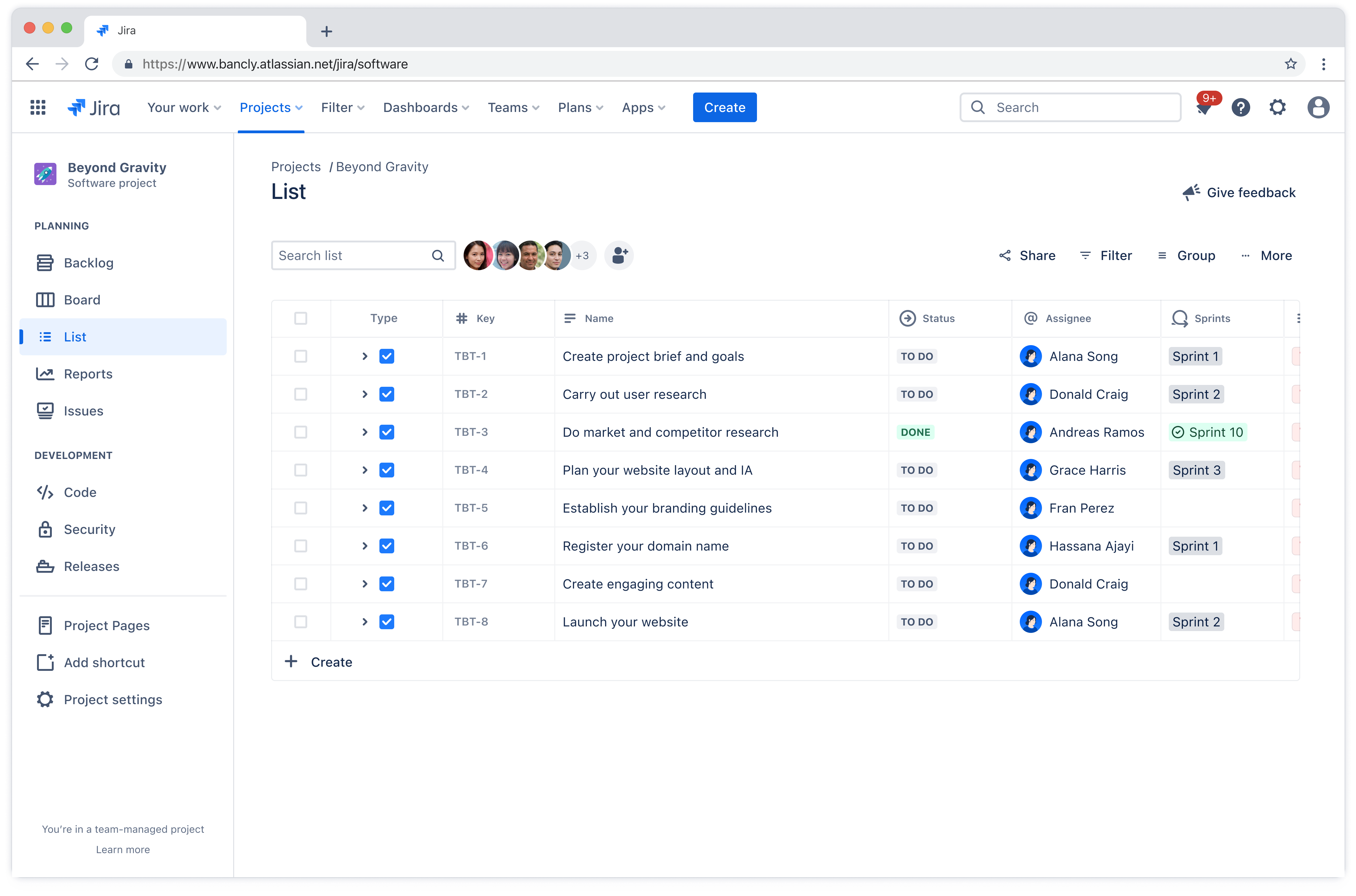
You can use List views to get a full view of the tasks and subtasks in motion, assignees, status, and other important information you’d want at a glance. This shared overview of all your tasks and their status allows your team to easily move their tasks into the right stage, keeping everyone in the loop.
Clear project life cycles drive better project outcomes
Managing each stage of a project life cycle can be overwhelming, but dedicated tools like Jira simplify the process. As a leading project management tool for all types of teams, Jira streamlines workflows, enhances task visibility, and fosters team collaboration.
With features like real-time reporting, customizable dashboards, and robust tracking, project managers can easily monitor progress and address issues as they arise. Whether you’re handling a small project or scaling up, Jira adapts to your needs.
It’s time to keep your teams more organized and deliver successful outcomes at every stage of the project life cycle.
Get Jira free and take your project life cycle management to the next level.
Recommended for you
TEMPLATE
Project Poster Template
A collaborative one-pager that keeps your project team and stakeholders aligned.
Confluence Templates
Browse our library of Confluence templates to help your team create, organize, and discuss work.