Product development process: 7-step guide for new products

By Atlassian
Key Takeaways
The new product development process moves teams from customer problems and early ideas to validated, launch-ready products—without losing focus along the way.
Each of the seven stages—from idea generation to post-launch learning—serves a specific purpose and feeds directly into the next.
Teams that involve cross-functional stakeholders early, define requirements clearly, and estimate work realistically ship better products faster.
In Agile environments, the process works best when it's treated as iterative and ongoing, not a rigid one-and-done sequence.
Most product failures aren't caused by bad ideas—they're caused by poor processes. Teams move too fast from concept to build, skip validation steps, or lose alignment somewhere between strategy and launch.
If you've ever shipped something that didn't land the way you expected, or watched a promising idea stall in development, you know the problem.
This guide walks through the full product development process: what it includes, how each stage connects, and what it takes to get from an early idea to a product customers actually want.
What is the product development process?
The product development process is the structured approach teams use to turn a product idea into a market-ready product. It covers the full journey: discovery, prioritization, product strategy, planning, prototyping, testing, launch, and post-launch learning.
These three areas each play a distinct role:
Product discovery: Understanding customer needs, validating assumptions, and identifying the right problems to solve before committing to a solution
Product development: The work of designing, building, testing, and refining the actual product
Product management: The ongoing work of aligning strategy, priorities, teams, and stakeholders across the entire lifecycle while ensuring that product features align with user needs and business goals
In Agile environments, the process is rarely linear. Teams move through stages iteratively, revisiting earlier steps as they learn more rather than treating each phase as a gate to pass through and close.

4 main types of product development
There are four types of product development, including:
Type | What it is | Example |
New product development | Creating a product that is new to the market | A new app that solves an unmet customer problem |
New product category | Creating something new to the company, but not necessarily new to the market | A finance software company adding tax tools |
Product line extension | Expanding an existing product line | Adding a version for a new industry or audience |
Product enhancement | Improving an existing product | Adding new features, integrations, or performance improvements |
Product development process summary
Here's a quick view of all seven product dev stages before we go deeper into each one:
Stage | Goal | Main output |
1. Generate ideas | Identify customer problems, market opportunities, and possible solutions | List of product ideas |
2. Screen ideas | Decide which ideas are worth exploring further | Prioritized ideas or shortlist |
3. Create a product strategy | Define the product vision, audience, goals, and value proposition | Product strategy or brief |
4. Build a product roadmap | Turn strategy into a sequenced plan | Product roadmap |
5. Prototype | Create a testable version of the concept | Prototype, MVP, or proof of concept |
6. Test | Validate usability, quality, feasibility, and market fit | Test results, bugs, feedback, decisions |
7. Launch | Release the product and coordinate go-to-market work | Launch plan and post-launch metrics |
The 7 stages of new product development
Successful Agile software development takes careful planning and good project management practices. The seven stages of new product development guide you through the process by breaking the work into stages or steps.
Step 1: Generate and capture product ideas
Every product starts with a problem. Ideas can come from customer interviews, support tickets, sales conversations, market research, product analytics, competitor analysis, internal brainstorming, and stakeholder requests.
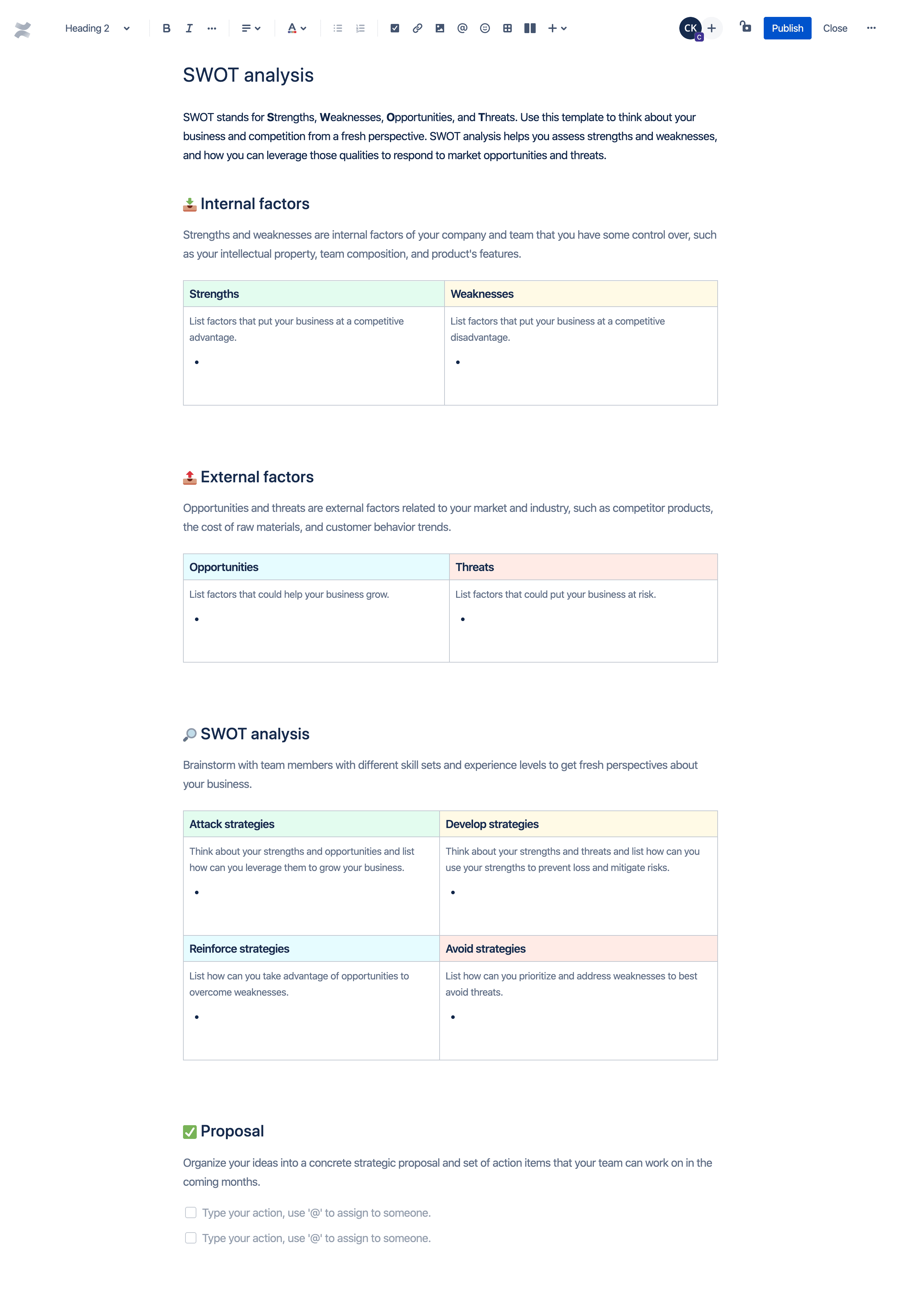
A SWOT analysis can also help clarify where real opportunities exist before the team commits to a direction. If you need to get started now, try using a SWOT analysis template.
The goal at this stage is volume, not judgment. Capture ideas without filtering them too early. The more ground you cover now, the better your shortlist will be in the next step.
In-depth and collaborative product management tools allow teams to organize ideas alongside supporting data. This includes things like customer feedback, sales input, and usage signals so nothing gets lost between tools.
Step 2: Screen and prioritize ideas
Once you have a pool of ideas, the next step is narrowing the list. Idea screening helps teams separate promising opportunities from ideas that are too risky, too costly, poorly timed, or misaligned with strategy.
Here are the criteria most teams use when scoring ideas:
Customer need: Does this solve a real, validated problem?
Business impact: Does it advance a meaningful company goal?
Strategic fit: Does it align with where the product is headed?
Technical feasibility: Can the team actually build it?
Market opportunity: Is there a real audience for this?
Development effort: How much work would this actually take?
Risk: What are the assumptions that could be wrong?
Confidence level: How much evidence backs this up?
For example, if you're comparing two ideas, like a major new feature versus a targeted integration, scoring both on impact versus effort can quickly reveal which one delivers more value for the resources it requires.

With the help of product matrix views, you make this comparison straightforward. Teams score and rank ideas using custom fields, then use those scores to decide what moves forward and what gets shelved for a future cycle.
Step 3: Create a product strategy
Once an idea is selected, teams need to define why the product should exist, who it serves, what problem it solves, and how success will be measured. That's the job of a product strategy.
Understand that this is different from a product roadmap. Strategy defines the direction, while the roadmap defines the plan.
A solid product strategy includes:
Product vision: The long-term outcome the product is working toward
Target customer or user: Who this is for, specifically
Customer problem: The problem being solved—in the customer's words, not the team's
Value proposition: Why this solution, for this audience, at this time
Business goals: What the company stands to gain
Success metrics: How you'll know it's working
Competitive positioning: Where this fits relative to alternatives
Key assumptions and risks: What has to be true for this to succeed
Getting the strategy documented before moving forward removes ambiguity. It gives every downstream decision—design choices, scope tradeoffs, go-to-market planning—something to anchor to.
4. Build a product roadmap

A product roadmap is an action plan. It outlines product functionality and release schedules and helps you manage new product development.
Think of the roadmap as the core communication tool for short- and long-term efforts that align with your business goals. It's a shared source of truth for a product’s vision, direction, priorities, and progress over time.
Creating a great product roadmap keeps your entire team working together and moving in the same direction. They also make it easy to check in on the work at any time throughout the product development life cycle.
Share your product strategy using always-up-to-date, custom roadmaps to present which ideas will be built, when, and why. Get started for free with a product roadmap template.
Step 5: Create and validate a prototype
Prototyping is how teams test a concept before committing to full development. The goal is a version of the product that's good enough to learn from.
Prototypes can take many forms depending on what you need to validate:
Wireframes: Low-fidelity sketches that map out structure and flow
Clickable mock-ups: Higher-fidelity designs that simulate user interactions
Proofs of concept: Technical builds that test feasibility without full features
Minimum viable products: Stripped-down versions that test core value with real users
Concierge prototypes: Manual, behind-the-scenes delivery that mimics the product experience before anything is built
Before moving to full development, teams should validate these questions:
Does the solution actually solve the right problem?
Can users understand how to use it without guidance?
Is the underlying concept technically feasible?
Does the value proposition resonate with the target user?
What needs to change before development begins?
Answering these early is far less expensive than discovering the answers mid-build.
Step 6: Test the product and resolve issues
Defects and change requests are simply a fact of new product development. However, concise issue tracking keeps everyone on your team informed, organized, and on schedule.
Testing can span both internal quality assurance (QA) teams as well as customers and end users engaged in alpha, beta, or user acceptance testing. Here's what a well-run testing process includes:
Define "ready to test" before testing begins, so the team isn't chasing a moving target
Track bugs, defects, and user feedback in a centralized tool where everyone can see status and priority
Categorize issues by severity, product area, and owner so nothing falls through the cracks
Summarize findings for product, engineering, and launch teams in a format they can act on
Decide what blocks launch versus what moves to the product backlog for a future release
Jira is the leading tool that Agile teams use for testing. It optimizes the QA workflow by writing and managing test scripts, tracking test cases, and managing defects.
Step 7: Launch, measure, and learn
Launch is a milestone, not a finish line. Getting the product out the door is the goal of this stage, but what happens after launch is just as important as the release itself.
Teams that treat launch as the end of the process miss the feedback that shapes everything that comes next. A product launch requires coordinating a lot of moving parts across teams—which typically includes:
Go-to-market plan: Messaging, channels, and audience targeting
Launch timeline: Coordinated rollout across product, marketing, sales, and support
Sales and support enablement: Making sure frontline teams know what's shipping and how to talk about it
Product documentation: User-facing guides, release notes, and help content
Customer communication: Announcement emails, in-app messaging, and other touchpoints
Monitoring plan: Which metrics you're watching and how often
Feedback collection process: How you'll gather input from early users
Post-launch retrospective: What worked, what didn't, and what the team would do differently
A product launch checklist helps make sure nothing gets missed when coordinating across teams. After launch, track adoption, activation, retention, support volume, revenue, and performance against the success metrics defined in the product strategy.
This data feeds back into the next round of product discovery, closing the loop between what was shipped and what comes next. You only get one chance to make a good first impression, and launching a new product requires careful planning and delivery.

Every step in the process is a building block to a successful launch. Confluence’s product launch template helps ensure a smooth launch. Get the template for free!
Example of new product development
Consider a B2B software company that notices—through support tickets and customer interviews—that users are spending significant time manually syncing data between their product and their CRM.
The team captures this as a potential idea, screens it against other priorities, and scores it high on both customer need and business impact. From there, they define a product strategy: build a native CRM integration that eliminates manual data entry for their core user persona.
They build a roadmap that sequences the integration in the next quarter, create a clickable prototype of the sync flow, and test it with five customers. Feedback reveals that users want control over which fields sync, a detail not in the original scope.
The team adjusts before development begins. They ship the integration, monitor adoption over 30 days, and collect feedback on what's still missing.
The post-launch retrospective surfaces two new ideas that go straight into the backlog.
Build products with a clearer path from idea to launch
The strongest product development processes connect discovery, prioritization, strategy, delivery, and launch planning into one shared workflow so teams always know what they're building, why, and what comes next.
Jira Product Discovery handles the upstream work of capturing ideas, scoring and prioritizing them, and sharing a live roadmap with stakeholders. Jira handles the downstream work of tracking development, managing testing, and coordinating launch. Together, they give teams a complete view of the product development lifecycle without switching between disconnected tools.
Get started with Jira Product Discovery.
New Product Development Process FAQs
What are some best practices for new product development?
Successful product launches often follow these practices:
Start with the customer: Invest time in customer interviews and discovery before development. Teams that understand the problem make better decisions throughout.
Foster cross-functional collaboration: Involve product management, design, engineering, QA, marketing, and more. Shared tools and goals help teams move faster and deliver better results.
Define requirements clearly: Solid product specification aligns scope before development begins and reduces costly mid-build pivots.
Manage resources against a clear roadmap: Agile roadmaps and a well-defined product development strategy helps spot bottlenecks, manage dependencies, and avoid over-committing resources.
Who is typically involved in the product development process?
New product development is a cross-functional effort:
Product managers own the strategy and roadmap
Designers handle user research, prototyping, and UX
Engineers build and test. QA validates quality before release
Marketing and sales shape go-to-market planning and customer communication
Legal and compliance review regulatory requirements
How long does the new product development process take?
Timelines depend on product complexity and team capacity. Simple features may launch in weeks, while new products can take months or years.
The key is a structured process that catches issues early, as problems found during prototyping are much cheaper to fix than those found after launch.
How does Agile affect the product development process?
Agile promotes shorter cycles, early validation, and flexibility over rigid plans. The product development process becomes iterative, with teams revisiting discovery, prototyping, and testing before and after launch.
A product launch checklist helps Agile teams coordinate final steps while staying adaptable.
Recommended for you
Ready-made Jira templates
Browse our library of custom Jira templates for various teams, departments, and workflows.
A comprehensive introduction to Jira
Use this step-by-step guide to discover essential features and the best practices to maximize your productivity.
Understanding the Basics of Git
From beginners to advanced experts, use this guide to Git to learn the basics with helpful tutorials and tips.